
Many people ask how old is the Kaaba when they start reading about Makkah, Umrah, and Islamic history. The question becomes even stronger for travelers who are planning a sacred visit through a 5 night luxury Umrah package because the Kaaba is the main spiritual center of the journey.
This article is only about the age of Kaaba, its timeline, and its rebuilding history. It will not repeat the full general details of the Kaaba because that already belongs to a wider topic. Here, the focus is age, construction memory, and careful historical wording.
The short answer is this: in Islamic tradition, the Kaaba is an ancient sacred house linked with Prophet Ibrahim and Prophet Ismail. Its exact age in modern calendar years is not confirmed through 1 fixed date. Because of this, it is better to speak with care instead of giving a random number.
Kaaba Age In Islamic Tradition
In Islamic tradition, the Kaaba is linked most clearly with Prophet Ibrahim and Prophet Ismail. They raised the foundations of the Sacred House by the command of Allah.
This means the Kaaba is thousands of years old in sacred Islamic memory. Many people connect its age with the era of Prophet Ibrahim. But the exact year of that building is not given in a way that can be turned into 1 certain modern date.
So when someone asks, “how old is the Kaaba,” the most careful answer is:
The Kaaba is an ancient sacred house. In Islamic tradition, it is connected with Prophet Ibrahim and Prophet Ismail, and its age goes back thousands of years. Its exact calendar age is not fixed with full certainty.
This answer is more honest than saying a random number without context.
Exact Date And Careful Timeline Notes
The Kaaba history timeline has 2 sides.
The first side is sacred tradition. This includes the Quranic and Islamic memory of Prophet Ibrahim and Prophet Ismail raising the foundations of the Kaaba.
The second side is historical rebuilding. This includes later repairs, rebuilding, and restoration work across different periods.
These 2 sides should not be mixed carelessly. A sacred origin is not the same as a dated modern construction record.
For example, a person may ask, “when was Kaaba built?” In Islamic tradition, the answer points to Prophet Ibrahim and Prophet Ismail. But if the person asks for the exact year in today’s calendar, then the answer needs caution.
This careful style protects the topic from weak claims.
Prophet Ibrahim’s Place In The Timeline
Prophet Ibrahim is central to the age of the Kaaba. The most important Islamic account is that Prophet Ibrahim and Prophet Ismail raised the foundations of the Sacred House.
This story gives the Kaaba its deep connection with tawheed, worship, dua, and obedience to Allah. It also explains why the Kaaba is not just old in a historical sense. It is old in a sacred sense.
For readers who want the builder side in more detail, the article on who built the Kaaba gives a focused explanation of Prophet Ibrahim, Prophet Ismail, and Kaaba construction.
The age question becomes clearer when the builder question is understood first. The Kaaba’s age is not only about counting years. It is about a sacred history that Muslims remember through worship.
Kaaba Rebuilding History Across Time
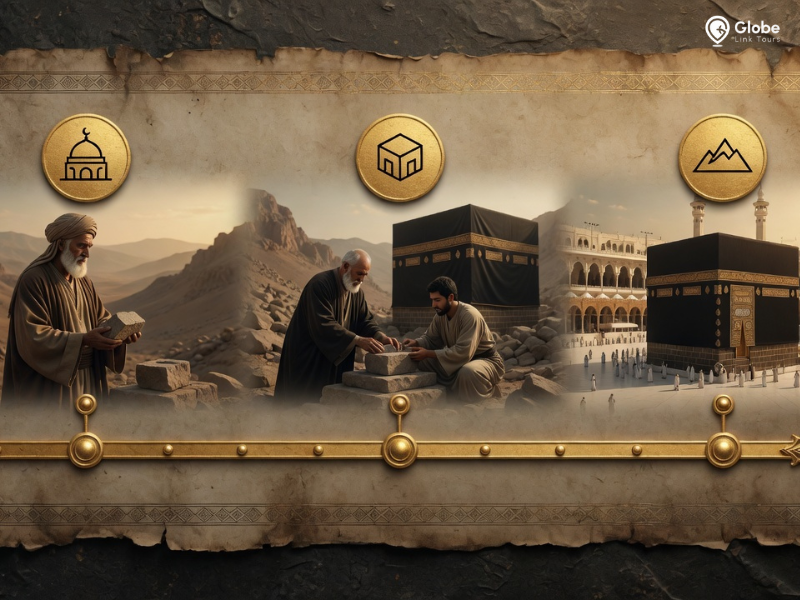
The Kaaba has been rebuilt and repaired at different times. This can confuse readers because they may think rebuilding means the original sacred status changed. It did not.
A sacred place can be restored while keeping its religious meaning. The Kaaba’s honor is not removed because its walls needed care over time.
Floods, damage, age, and political events affected the structure at different points. Muslim rulers and authorities restored and protected it because of its high position in Islam.
This is why Kaaba rebuilding history matters. It shows that Muslims did not treat the Kaaba like an ordinary building. They preserved it with great care.
Quraysh Rebuilding Before Prophethood
One important rebuilding happened before the prophethood of Prophet Muhammad ﷺ. The Quraysh rebuilt the Kaaba when the structure needed repair.
This event is also known because of the Black Stone placement. Different tribes wanted the honor of placing the Black Stone. Prophet Muhammad ﷺ solved the matter with wisdom before his prophethood. He placed the stone on a cloth and allowed leaders from different tribes to lift it together, then he placed it in position.
This event is important in the timeline because it shows that the Kaaba was already honored before Islam was restored fully in Makkah.
It also shows that the structure had repair history even before later Islamic periods.
Ibn Zubayr Era And Later Restoration
Another major chapter in Kaaba rebuilding history is linked with Abdullah ibn al Zubayr. After damage during conflict, the Kaaba was rebuilt in his time.
Historical accounts mention that Ibn al Zubayr rebuilt it closer to the foundations connected with Prophet Ibrahim, including changes related to Hijr Ismail and doors.
Later, during the Umayyad period, the structure was changed again. The Kaaba was restored closer to the earlier Quraysh form.
These events can feel hard for new readers. The main point is that the Kaaba saw rebuilding more than once, but its sacred place in Islam remained firm.
A reader should not treat these rebuilding events as separate “new Kaabas.” They are chapters in the care and repair of the same sacred house.
Major Repairs In Later Centuries
Over time, the Kaaba needed more repairs. Makkah faced floods more than once, and water damage affected the structure.
One major rebuilding took place in the Ottoman period after serious flood damage in the 17th century. The damaged walls were rebuilt and the sacred structure was preserved.
Later, other repairs and care work continued. Some work was related to the roof. Some was related to marble, walls, and internal structure. Some was linked with cleaning, protection, and maintenance.
This long record shows that the Kaaba’s timeline is not a single line only. It is a sacred house with ancient origin and repeated care across centuries.
Modern Care And Renovation Work
In modern times, the Kaaba has continued to receive careful maintenance. The structure, roof, interior areas, marble, and related parts have been cared for under official supervision.
Major modern restoration work took place in the Saudi era, including internal repair and renewal work during the late 20th century. This included care for the inner walls, ceiling, pillars, floor, and other structural parts.
For readers interested in the Kaaba’s meaning beyond age, the guide on Kaaba meaning, history, and qibla direction gives wider context without focusing only on the timeline.
The age of Kaaba should be understood with both respect and care. It is ancient in sacred memory, and it has also been physically cared for across many periods.
Clear Timeline Reading Method

1. Start With Sacred Origin
Begin with the Islamic tradition that links the Kaaba with Prophet Ibrahim and Prophet Ismail.
2. Separate Origin From Repairs
The original sacred history is 1 matter. Later rebuilding and repairs are another matter.
3. Avoid One Random Number
Be careful with exact age claims unless the source gives clear context. The safer answer is that the Kaaba is ancient and linked with Prophet Ibrahim.
4. Read Rebuilding As Preservation
Rebuilding does not mean the sacred identity changed. It means the structure was protected.
5. Keep Worship At The Center
The Kaaba’s value is not only its age. Its value is tied to worship, qibla, tawaf, and its sacred place in Islam.
Real Umrah Reflection On The Kaaba’s Age
Imagine a first time pilgrim entering Masjid al Haram. He has read about the age of Kaaba before travel. He knows that the exact calendar number is not the main point. He also knows that the Sacred House is tied to Prophet Ibrahim and Prophet Ismail.
When he sees the Kaaba, he does not only see a building. He thinks about thousands of years of worship, rebuilding, care, prayer, and tawaf.
His father tells him, “This place has been honored by Muslims across generations.” That sentence stays in his heart.
This is the real power of the age question. It is not only about history. It helps the pilgrim feel connected to the long line of worshippers who came before.
Errors That Confuse The Timeline
Treating Rebuilding As A New Beginning
Some people think every rebuilding means the Kaaba became new from zero. This is not the right way to read the history. Rebuilding was part of preservation.
Giving A Fixed Age Without Context
A random number can sound strong, but it may not be careful. The exact year of Prophet Ibrahim’s construction is not fixed in modern calendar terms.
Mixing Photos With Ancient History
Old photos and drawings are useful, but they belong to recent visual history. They do not prove the first age of the Kaaba.
For visual record details, the guide on first depiction of Kaaba explains old images, manuscript views, and safe source reading.
Ignoring Islamic Tradition
The Kaaba age cannot be discussed only like a normal building. Islamic tradition is central to the subject.
Making The Topic Too General
The age question should stay focused on origin, rebuilding, and timeline. Too many unrelated details can weaken the article.
Careful Notes For Pilgrims And Students
Use respectful wording when speaking about the Kaaba. It is the Sacred House, not only a historical object.
When reading online, check if the article separates Islamic tradition from dated historical records. That difference matters.
Do not become upset if different sources present different timeline details. Some events are clear, while exact dates for ancient periods can be uncertain.
For families traveling with children, explain it in calm words. Say that the Kaaba is very ancient, linked with Prophet Ibrahim and Prophet Ismail, and cared for across many centuries.
For travelers who need more time in Makkah and Madinah, a 7 night luxury Umrah package can give more breathing space for worship, rest, and sacred visits.
The Age Of Kaaba In A Bigger Umrah Plan
Understanding the age of Kaaba can make Umrah feel deeper. But travel comfort also matters.
A pilgrim may know the history, but if the hotel is too far, transport is late, or the schedule is too rushed, the visit can become stressful. This is especially true for elderly parents, children, and first time travelers.
A good Umrah plan should include:
Makkah hotel distance
Prayer timing
Tawaf timing
Rest after travel
Madinah transfer
Family meeting point
Comfortable luggage plan
Extra care for elders
A longer stay through a 10 night premium Umrah package may suit travelers who want time to reflect, rest, and visit both sacred cities with less pressure.
The Kaaba’s age gives the mind context. A good travel plan gives the body comfort. Both matter during Umrah.
Travel Support For A Calm Sacred Journey
Many pilgrims want to understand the Kaaba before travel, but they also need support with real travel details. Flights, hotels, visas, transport, and stay length can create stress if they are not arranged well.
Globe Link Tours supports travelers with Umrah packages, hotel planning, visa assistance, flights, and trip notes. The goal is to keep the journey clear before departure, so pilgrims can focus more on worship in Makkah and Madinah.
Near the final stage of research, museum records can also give wider historical context for Islamic objects, manuscripts, and heritage material. The British Museum collection is one place where people can view catalogued objects and records in a more controlled setting than random image posts online.
Summary
The answer to how old is the Kaaba needs careful wording. In Islamic tradition, the Kaaba is an ancient sacred house linked with Prophet Ibrahim and Prophet Ismail. Its exact calendar age is not fixed with full certainty.
The Kaaba has been rebuilt and repaired across time. Important rebuilding events include the Quraysh period before prophethood, the Ibn al Zubayr period, later restoration, Ottoman era repairs after flood damage, and modern Saudi care.
These rebuilding events did not remove the sacred meaning of the Kaaba. They show that Muslims cared for and preserved the Sacred House across generations.
The Kaaba’s age is not only a number. It is a long story of worship, preservation, prayer, tawaf, and sacred memory.
FAQs
Kaaba Age In Islamic Tradition
The Kaaba is ancient and linked with Prophet Ibrahim and Prophet Ismail in Islamic tradition. Its exact modern calendar age is not fixed with full certainty.
Kaaba Built Timeline
Islamic tradition says Prophet Ibrahim and Prophet Ismail raised the foundations of the Kaaba by Allah’s command.
Kaaba Rebuilding Across Time
Yes, the Kaaba has been rebuilt and repaired at different times because of damage, floods, and structural needs.
Kaaba Importance For Muslims
The Kaaba is the qibla direction for prayer and the center of tawaf during Hajj and Umrah.
Exact Year Of Kaaba Construction
The exact year is not confirmed in a clear modern date. It is safer to say the Kaaba is ancient and linked with Prophet Ibrahim’s time.