
Many Muslims ask who built the Kaaba before they travel for Umrah. It is a natural question, especially for families preparing their first visit to Makkah through an affordable 5 night Umrah package. When a person understands the story before reaching Masjid al Haram, the first sight of the Kaaba can feel even more deep.
The Kaaba is not just a famous place. It is the Sacred House in Islam. Muslims across the world face it in prayer every day. Pilgrims perform tawaf around it during Umrah and Hajj. Its story is linked with Prophet Ibrahim, Prophet Ismail, trust in Allah, and the worship of 1 God.
This article explains the Kaaba construction in very clear English. It covers Islamic tradition, the role of Prophet Ibrahim, later rebuilding, the sacred meaning of the Kaaba, and travel notes for people visiting Makkah.
The Short Answer In Islamic Tradition
According to Islamic tradition, the Kaaba was built by Prophet Ibrahim and his son Prophet Ismail by the command of Allah.
They built it as a house of worship. It was not built for status, power, or business. It was built for tawheed, which means worship of Allah alone.
Some Islamic narrations also mention that the Kaaba has a very ancient origin and may have existed before Prophet Ibrahim’s time. But the clear and central Islamic story is that Prophet Ibrahim and Prophet Ismail raised its foundations and built it as a sacred house.
This is the main answer for the focus question, who built the Kaaba.
Prophet Ibrahim And Prophet Ismail’s Role
Prophet Ibrahim is one of the greatest prophets in Islam. His life shows trust, sacrifice, patience, and obedience to Allah.
The story of the Kaaba built by Ibrahim is also connected with his family. Prophet Ismail helped his father during the building. He carried stones, and Prophet Ibrahim placed them as the walls rose higher.
This father and son moment is powerful. It was not only construction work. It was worship. It was service. It was an act of love for Allah.
While building, they made dua and asked Allah to accept their work. This teaches an important lesson. Even a great prophet did not rely only on the action itself. He asked Allah for acceptance.
For a Muslim, this gives a soft reminder. Good work should be done with a sincere heart.
Makkah Before The Kaaba Became The Center
Makkah was not always a busy city with hotels, roads, and millions of visitors. In the early story, it was a dry valley. It was quiet and difficult. There was no large community there at first.
Prophet Ibrahim left Hajar and baby Ismail in that valley by Allah’s command. This was a test of trust. Hajar showed deep faith and strength. The story of Zamzam is connected with this same land.
Over time, people came to the valley because of water and settlement. Makkah slowly became a place where people lived, passed through, and later gathered for worship.
This background matters because it shows that the Kaaba story started with faith, not comfort. The place became great because Allah gave it honor.
Kaaba Construction With Faith And Dua
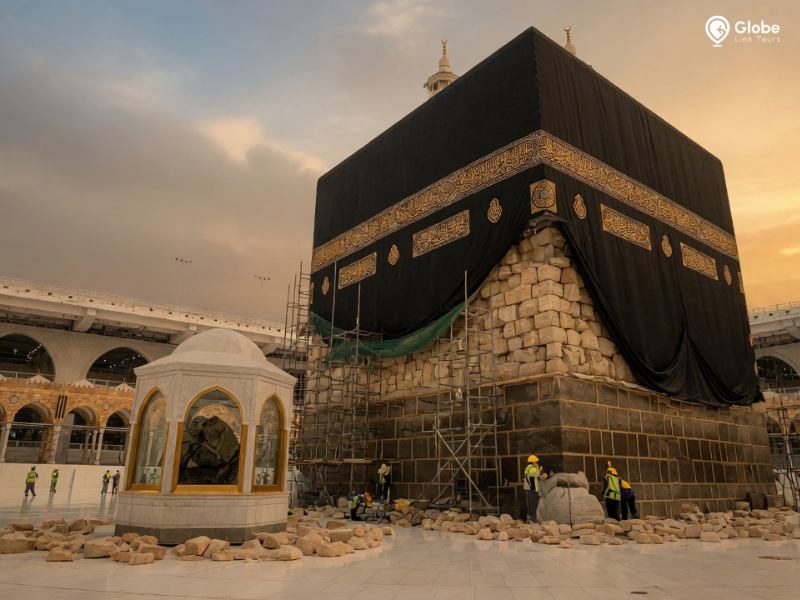
The Kaaba construction by Prophet Ibrahim and Prophet Ismail was guided by obedience. Islamic tradition describes them raising the foundations of the House and praying for acceptance.
The heart of the story is not only stone and structure. The deeper message is sincerity.
Prophet Ismail carried stones. Prophet Ibrahim built the walls. As the structure rose higher, Prophet Ibrahim stood on a stone to continue the work. That stone is known as Maqam Ibrahim.
Today, Maqam Ibrahim is near the Kaaba. Pilgrims see it during Umrah and Hajj. After tawaf, many pilgrims pray 2 rakats near it when space allows and crowd rules permit.
For many people, this part of the story makes the Kaaba feel closer. It is not only a sacred building from far away. It has a human story of a father, a son, work, dua, and trust in Allah.
Maqam Ibrahim And The Building Moment
Maqam Ibrahim is linked with the building of the Kaaba. It is the place connected to Prophet Ibrahim standing while raising the walls of the Sacred House.
For pilgrims, seeing Maqam Ibrahim can be emotional. It reminds them that the Kaaba was built through effort and submission to Allah.
This also gives meaning to Umrah. Tawaf is not just walking in circles. It connects the pilgrim with the worship of prophets, the unity of Muslims, and the history of Makkah.
A person who wants a wider view of the Kaaba’s spiritual meaning can read the guide on Kaaba meaning and qibla direction. It gives more context about the Kaaba in Islam and the reason Muslims face it in prayer.
Later Rebuilding Across Islamic History
The Kaaba has been rebuilt and repaired over time. This is important to understand because some people think the Kaaba never had any later work. Its sacred value is ancient, but the building has needed repairs due to floods, damage, and time.
Before the prophethood of Prophet Muhammad ﷺ, the Quraysh rebuilt the Kaaba. During that rebuilding, they raised the door and made some structural changes. A well known event from that time is the placing of the Black Stone. Prophet Muhammad ﷺ helped solve a dispute among the tribes by placing the stone in a way that honored all sides.
Later, the Kaaba saw more rebuilding and repair across Islamic history. Some work was linked with damage. Some work was linked with restoration. The structure has been cared for carefully because of its sacred status.
This history does not reduce its honor. It shows that Muslims have always treated the Kaaba with great care.
The Kaaba As Qibla And House Of Worship
The Kaaba is the qibla, which means the direction Muslims face in prayer. Muslims do not worship the Kaaba. Muslims worship Allah only.
The Kaaba gives Muslims 1 shared direction. A Muslim in Pakistan, America, Turkey, Indonesia, Africa, or any other place faces the same sacred point during salah. This creates unity across the ummah.
The Kaaba is also the center of tawaf. During Umrah and Hajj, pilgrims circle the Kaaba as an act of worship. This movement is calm, meaningful, and full of dua.
For people planning a longer journey, travel between Makkah and Madinah should also be arranged with care. The guide on distance Makkah to Madinah can support better planning for train, road, and timing after Makkah.
Inside The Kaaba And Its Modest Interior
Many people also ask about the inside of the Kaaba. The interior is modest and sacred. It is not full of objects of worship. It is not open for public tours.
Inside the Kaaba, there are 3 main pillars, marble areas, lamps, and inner covering. There is also a stairway area linked with roof access. Entry is limited to special official occasions and selected guests.
For more detail, travelers can read this guide on inside the Kaaba. It explains the interior elements and sacred context in an easy way.
This point is important. The Kaaba’s value is not based on decoration inside it. Its value is based on its place in worship, its link with Prophet Ibrahim, and its role as the qibla.
Step By Step Meaning For First Time Pilgrims
1. Understand The Builder Story
Before going to Makkah, remember that Prophet Ibrahim and Prophet Ismail built the Kaaba by Allah’s command. This makes the visit more meaningful.
2. Know The Qibla Meaning
The Kaaba is the direction of prayer, not an object of worship. This keeps the belief clear.
3. Connect Tawaf With History
When you walk around the Kaaba, remember the prophets, the duas, and the worship connected with this sacred place.
4. Respect Crowd Rules
Do not push near the Black Stone or Kaaba door. Worship should not harm others.
5. Give Elders Enough Time
Families should move slowly if parents or grandparents are with them. A calm pace protects health and focus.
6. Keep The Visit Spirit First
Photos, videos, and memories matter, but dua and worship matter more.
A Real Pilgrim Moment In Makkah
Imagine a young man traveling for Umrah with his mother. He has prayed toward the Kaaba all his life, but now he is standing in front of it.
His mother starts crying quietly. She tells him, “This is the House built by Ibrahim and Ismail.” Suddenly, the place feels different to him. It is not only a building covered by the Kiswah. It is a sacred house connected with prophets and generations of worship.
They wait for the crowd to become easier. Then they start tawaf slowly. They do not rush. They do not push. They make dua and stay close together.
This is the kind of visit that stays in the heart.
Travel Errors That Cause Confusion
Treating The Kaaba Like A Normal Landmark
The Kaaba is not a tourist monument. It is the holiest site in Islam. A visitor should keep respect before photos and social sharing.
Thinking Muslims Worship The Kaaba
This is wrong. Muslims worship Allah only. The Kaaba is the qibla direction for prayer.
Believing Every Online Claim
Some online posts mix facts, weak stories, and guesswork. Read from sources with care and ask qualified scholars for religious detail when needed.
Rushing During Tawaf
Crowds can become heavy. Pushing others to touch the Black Stone or reach the Kaaba is not good behavior.
Ignoring Weather And Walking Distance
Makkah can be hot, and walking can become tiring. Plan hotel distance, rest, and prayer timing with care.
For people also visiting Madinah, checking Al Madinah Saudi Arabia weather can help with clothing, elderly care, and travel comfort after the Makkah stay.
Trusted Visit Notes For A Better Umrah Trip
Read about the Kaaba before travel, but keep the heart humble. Sacred knowledge should make the visit more respectful.
Keep a meeting point for family members. Crowds near Masjid al Haram can separate people quickly.
Carry only needed items during tawaf. A heavy bag can make movement hard.
If traveling with elders, plan rest after every major worship step. Tiredness can make a beautiful journey stressful.
For families who need more days, an affordable 7 night Umrah package can give more time between arrival, Umrah, rest, and visits.
The Kaaba Story In A Wider Travel Plan
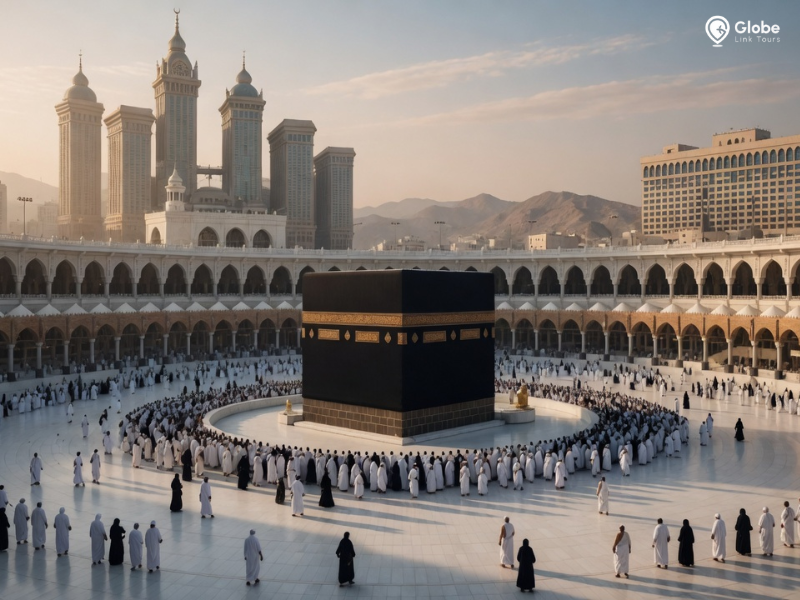
The story of who built the Kaaba connects directly with the purpose of Umrah. Pilgrims are not traveling only for a hotel stay or sightseeing. They are visiting a place tied to worship, tawheed, and the legacy of Prophet Ibrahim.
This is why the full travel plan matters. Your flight timing, hotel distance, transport, Madinah transfer, visa steps, and family support all affect your ability to focus on worship.
A good Umrah plan should include:
Makkah hotel distance
Madinah transfer timing
Prayer schedule
Rest time
Family meeting point
Luggage plan
Elderly support
Enough time for tawaf
A longer stay through a 10 night luxury Umrah package may suit travelers who want a slower pace and more time in both sacred cities.
Travel Support For Families And First Time Pilgrims
First time pilgrims often feel nervous before travel. They may worry about the visa, flights, hotel location, transport, or moving between Makkah and Madinah. This is normal.
Globe Link Tours supports travelers with Umrah packages, hotel arrangements, visa assistance, flights, and travel notes. The aim is to make the journey clear before departure, so pilgrims can focus more on worship after reaching Saudi Arabia.
Families, elders, and group travelers often need more planning than solo travelers. A clear plan gives peace. It also reduces last minute stress.
Near the final stage of reading, people interested in Islamic history and historical objects can view public museum records through the British Museum collection. It can give wider context for Islamic art, manuscripts, and historical material connected with Muslim heritage.
Summary
According to Islamic tradition, Prophet Ibrahim and Prophet Ismail built the Kaaba by the command of Allah. They built it as a house of worship and a symbol of tawheed.
The Kaaba has been rebuilt and repaired over time, but its sacred meaning remains connected with Prophet Ibrahim, Prophet Ismail, prayer, tawaf, and the unity of Muslims.
Muslims do not worship the Kaaba. They worship Allah only. The Kaaba is the qibla direction and the sacred center of Hajj and Umrah.
For pilgrims, understanding the story before travel can make the first sight of the Kaaba more powerful. It turns the visit from a travel moment into a deeper act of faith, memory, and worship.
FAQs
Builder Of The Kaaba In Islamic Tradition
The Kaaba was built by Prophet Ibrahim and Prophet Ismail by the command of Allah.
Prophet Ibrahim’s Link With The Kaaba
Prophet Ibrahim raised the foundations of the Kaaba with his son Prophet Ismail and made dua for Allah to accept their work.
Later Rebuilding Over Time
Yes, the Kaaba has been rebuilt and repaired at different times in history because of damage, floods, and structural needs.
Kaaba Construction Purpose
The Kaaba was built as a house of worship for Allah alone and later became the qibla direction for Muslims.
Kaaba And Muslim Prayer
Muslims face the Kaaba during prayer because it is the qibla. Muslims worship Allah only, not the Kaaba.