
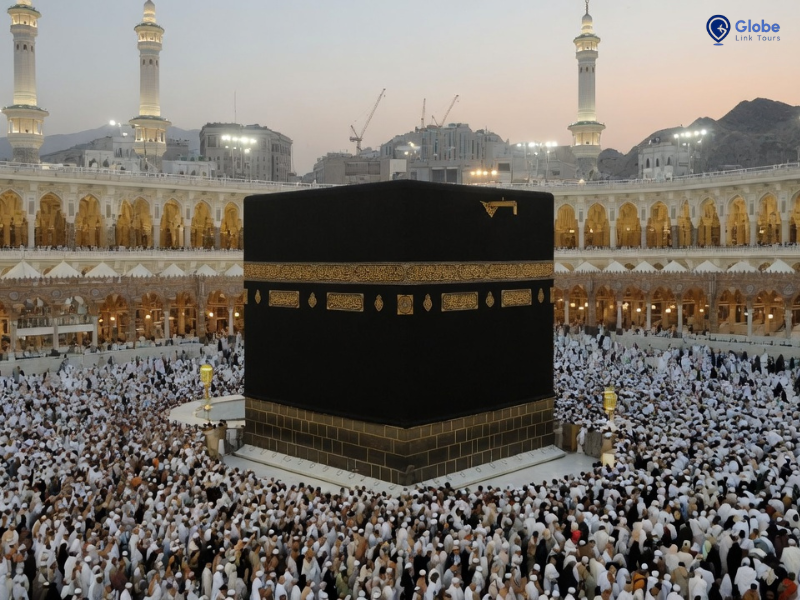
The Kaaba is the holiest place in Islam and the direction Muslims face during prayer. Many families who book a 5 night luxury Umrah package already know they will see the Kaaba, but they may not fully understand its meaning before reaching Makkah.
That first sight can be emotional. Some people become quiet. Some cry. Some stand still for a moment because the heart feels full. This is normal. The Kaaba is not just a building. It is the sacred center of worship for Muslims across the world.
Every day, Muslims in different countries face the same direction in salah. Rich and poor, young and old, new Muslims and born Muslims, all turn toward the Kaaba. This gives a strong feeling of unity. It reminds every believer that worship is for Allah alone.
This article explains the Kaaba meaning, its history, its place inside Masjid al Haram, and the reason Muslims face it in prayer.
Kaaba Meaning In Islam
Kaaba means a cube shaped house. In Islam, it refers to the Sacred House in Makkah. It is also called the Holy Kaaba, Al Bayt Al Haram, and the House of Allah.
Muslims do not worship the Kaaba. This is very important to understand. Muslims worship Allah only. The Kaaba is the qibla direction, which means the direction Muslims face during salah.
The Kaaba gives Muslims one shared direction. Without qibla, people would face different ways during prayer. With qibla, the whole Muslim ummah is connected in a single direction.
The Kaaba also reminds Muslims of obedience, sacrifice, and worship. Its history is linked with Prophet Ibrahim, Prophet Ismail, and the early story of Makkah.
The Holy Kaaba Inside Masjid Al Haram
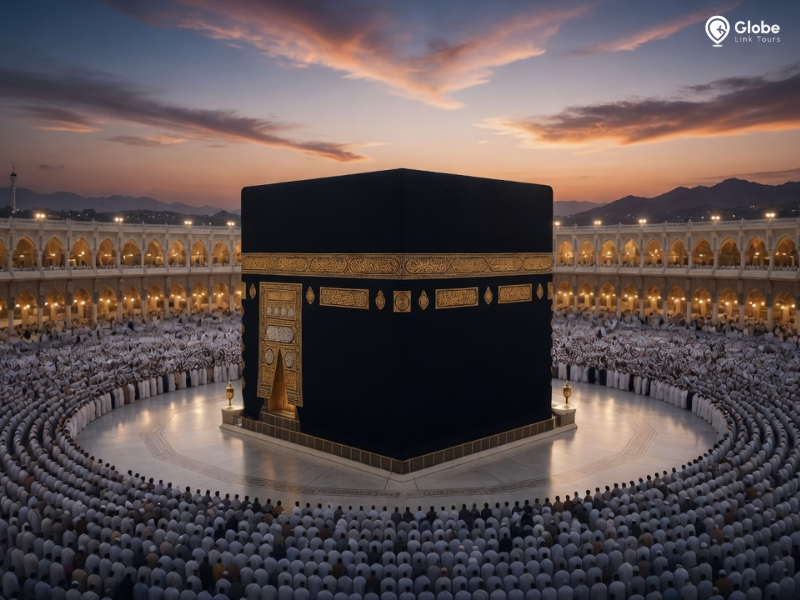
The Holy Kaaba stands in the center of Masjid al Haram in Makkah. Masjid al Haram is the Grand Mosque and the most sacred mosque in Islam.
During Umrah and Hajj, pilgrims walk around the Kaaba in tawaf. Tawaf means circling the Kaaba as an act of worship. This is done with care, love, and respect.
The Kaaba is covered with a black cloth called the Kiswah. It has beautiful Arabic calligraphy in gold colored embroidery. Many pilgrims see the Kiswah and feel the honor of the place.
The area can become crowded, especially near prayer times, Ramadan, and Hajj days. This is why planning matters. A calm schedule helps you spend time in Masjid al Haram without feeling lost or rushed.
A Short Journey Through Kaaba History
The Kaaba has a deep and long history in Islam. Muslims believe it was raised as a house of worship by Prophet Ibrahim and his son Prophet Ismail by the command of Allah.
The Quran mentions the raising of the foundations of the House by Ibrahim and Ismail. This links the Kaaba with pure monotheism, which means worship of Allah alone.
Before Islam, different tribes had placed idols around the Kaaba. Later, Prophet Muhammad ﷺ entered Makkah and restored the Kaaba as a place of worship for Allah alone. This was a major moment in Islamic history.
The Kaaba has also been repaired and renovated at different times. Floods, age, and structural needs led to careful work across history. Today, the Kaaba is cared for with great respect by the authorities responsible for the holy sites.
A Muslim’s belief in the Kaaba is connected with faith, revelation, and guidance. This wider faith context is also seen in the Islamic belief in revelation and sacred scripture, which is explained in this guide on belief in holy books in Islam.
Prophet Ibrahim And The Sacred House
The story of the Kaaba is deeply connected with Prophet Ibrahim. He obeyed Allah and left his family in the valley of Makkah. At that time, the land was dry and quiet.
His wife Hajar and son Ismail stayed there by Allah’s command. The story of Zamzam also connects with this place. Later, people settled in the valley, and Makkah grew around this sacred area.
Prophet Ibrahim and Prophet Ismail raised the foundations of the Kaaba as a house of worship. This story teaches trust, patience, and obedience.
For pilgrims, this history makes the visit more meaningful. You are not only seeing a famous place. You are standing near a site connected with prophets, dua, sacrifice, and generations of worship.
Qibla Direction And Muslim Unity
Qibla direction means the direction Muslims face during salah. For Muslims, that direction is the Kaaba in Makkah.
This does not mean Allah is inside the Kaaba. Allah is not limited by place. Facing the Kaaba is an act of obedience and unity. It gives Muslims 1 shared direction during prayer.
A person praying in Pakistan, America, Turkey, Indonesia, Africa, or Europe all faces the same sacred point. This creates a powerful bond between Muslims.
The Kaaba in Islam is a sign of order. It teaches that worship is not random. It has guidance, direction, and discipline.
For first time pilgrims, this becomes very emotional. The direction they faced for years in prayer is now in front of their eyes.
Kaaba During Hajj And Umrah
During Umrah, pilgrims perform tawaf around the Kaaba. This is one of the key acts of Umrah. During Hajj, tawaf is also a major part of the pilgrimage.
The Kaaba becomes the heart of movement in Masjid al Haram. Thousands of people move together in circles. They are from different languages and countries, but the worship is the same.
Some people travel alone. Some travel with family. Some come with community groups. If you are planning with relatives, elders, or a masjid group, this Umrah group travel guide can support better timing and group movement.
For a group, staying together near the Kaaba can be hard. Crowds move fast. A clear meeting point and calm plan can reduce worry.
Main Features Around The Kaaba
Several important parts are connected with the Kaaba area.
The Black Stone is placed in one corner of the Kaaba. Pilgrims may kiss it or point toward it during tawaf if reaching it is not possible.
Al Multazam is the area between the Black Stone and the Kaaba door. Many people make dua there when space allows.
The Kaaba door is raised above ground level and is not open for regular visitors. It is opened only during special official moments.
Hijr Ismail is the semi circular area near the Kaaba. Pilgrims must move around it during tawaf, not through it.
Maqam Ibrahim is near the Kaaba and is linked with Prophet Ibrahim. After tawaf, pilgrims pray 2 rakats if space and crowd conditions allow.
These features are not just points on a map. They carry sacred meaning and should be approached with respect.
Spiritual Respect Near The Sacred House
The Kaaba area can bring strong feelings. Some pilgrims feel joy. Some feel regret for past sins. Some feel deep peace. Some feel overwhelmed because the crowd is large.
All these feelings are normal.
A respectful visit means keeping your worship calm and not hurting others. Do not push people to touch the Kaaba or Black Stone. Do not block the path for photos. Do not shout at family members in the crowd.
The best visit is not always the one with the closest photo. It is the one where your heart stays focused and your manners stay kind.
For travelers staying more days, a 7 night luxury Umrah package can give more time to visit Masjid al Haram without trying to do everything in a hurry.
Step By Step Visit Notes For First Time Pilgrims
1. Prepare Your Heart Before Entering
Enter Masjid al Haram with respect. Keep your intention clean. Try to reduce phone use during your first sight of the Kaaba.
2. Check Prayer Timing Before Leaving Hotel
Prayer times affect crowd levels. A guide for Makkah prayer timing can help you plan visits better, especially during busy days.
3. Keep Family Meeting Points Clear
Crowds can separate people quickly. Pick a meeting point outside the tawaf crowd. Share hotel name and phone numbers with everyone.
4. Carry Only Needed Items
A small bag is enough. Keep water, phone, hotel card, and any needed medicine. Heavy bags make movement harder.
5. Avoid Pushing Near Sacred Points
The Black Stone and Kaaba door area can become crowded. If you cannot reach them safely, continue tawaf and make dua.
6. Rest Between Worship
Tiredness can make worship harder. Resting is not a weakness. It helps you return with more focus.
Real Umrah Moment In Front Of The Kaaba
Imagine a father arriving in Makkah with his wife, 2 children, and elderly mother. They enter Masjid al Haram after a long flight. The children are excited, but the grandmother is tired.
The family sees the Kaaba. Everyone becomes quiet. The father wants to start tawaf right away, but he notices his mother needs rest. He takes the family to a calmer spot first. They sit, make dua, drink water, and wait for a better time.
Later, they perform tawaf with more peace.
This small decision changes the whole visit. Instead of rushing, they protect the comfort of the elderly mother. This is real travel wisdom. Sacred places should not be visited with panic. They should be visited with care.
Travel Errors That Create Stress
Treating The Kaaba Like A Photo Spot
Photos may be allowed in some areas, but the Kaaba is not a normal tourist place. Worship and respect should come first.
Rushing Tawaf In Heavy Crowds
Some people push to finish quickly. This can hurt others. Tawaf should be done with patience and care.
Ignoring Elderly Pilgrims
Elders may need more time, shade, wheelchair support, or a slower pace. Plan around their comfort.
Forgetting The Meaning Of Qibla
Some travelers focus only on seeing the Kaaba and forget the deeper meaning. The Kaaba is the prayer direction and a sign of unity, not an object of worship.
Poor Timing Around Salah
Going at the busiest time without a plan can create stress. Check timing, distance, and crowd level when possible.
Trusted Tips For A Better Makkah Visit
Keep your first visit to the Kaaba calm. Do not try to record everything. Some moments are better kept in the heart.
Visit during less crowded times if your body needs a slower pace. This is especially useful for elders and children.
Keep footwear safe in a known place. Many pilgrims lose sandals because they forget the gate or rack.
Drink water, but avoid carrying too much. Keep your body comfortable.
Use hotel distance wisely. A closer hotel can help you rest between prayers. This matters a lot during hot weather and busy seasons.
During special nights of worship, Makkah can become very crowded. If your trip is near Ramadan, this guide about Laylatul Qadr meaning and worship guidance can give good spiritual context for planning your worship time.
Kaaba And The Bigger Umrah Plan
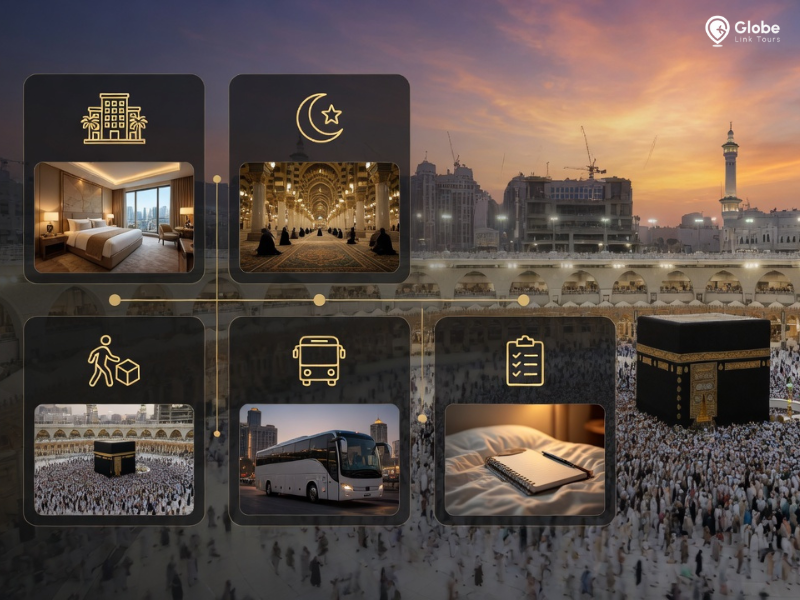
The Kaaba is the center of your Umrah experience, but the full journey includes many other parts. Your hotel location, flight timing, visa, transport, luggage, and prayer plan all affect your comfort.
If you are traveling for Hajj instead of Umrah, budget planning becomes even more important. Many families from the USA compare costs, stay length, and services through guides like affordable Hajj packages for USA pilgrims.
For Umrah, the focus is often on Makkah and Madinah stays. A longer plan like a 10 night premium Umrah package may suit travelers who want more time for worship, rest, and movement between cities.
The Kaaba gives your trip its spiritual center. Good planning protects that experience from stress.
Travel Support For A Peaceful Journey
Many first time pilgrims feel confused before travel. They may not know which hotel is closer. They may not know the best time for flights. They may worry about transport, visa steps, or family needs.
Globe Link Tours supports travelers with Umrah packages, hotel planning, visa assistance, flights, and travel notes. The aim is to make the journey clear before departure, so pilgrims can focus more on worship after reaching Makkah.
Travel support is useful for families, elders, group travelers, and people with limited time. A planned journey can reduce small problems that often become big stress during travel.
Near the end of your reading, it also helps to understand the larger sacred setting. The Kaaba stands inside Masjid al Haram, the Grand Mosque in Makkah, which is the central mosque for Hajj and Umrah pilgrims.
Summary
The Kaaba is the holiest site in Islam and the qibla direction for Muslims during prayer. Muslims do not worship the Kaaba. They worship Allah only, while facing the Kaaba as an act of obedience and unity.
The Kaaba meaning is connected with worship, history, Prophet Ibrahim, Prophet Ismail, and the sacred city of Makkah. It stands inside Masjid al Haram, where pilgrims perform tawaf during Umrah and Hajj.
For visitors, seeing the Holy Kaaba can be one of the most emotional moments of life. A good plan helps protect that moment. With the right timing, hotel choice, family support, and calm movement, your visit to the Kaaba can feel more peaceful and meaningful.
FAQs
Kaaba Meaning In Islam
The Kaaba is the Sacred House in Makkah and the qibla direction for Muslim prayer. Muslims worship Allah only, not the Kaaba.
Muslim Prayer Direction Toward The Kaaba
Muslims face the Kaaba because Allah gave it as the qibla direction. It unites Muslims across the world in prayer.
Kaaba Location Inside Masjid Al Haram
Yes, the Kaaba is inside Masjid al Haram in Makkah. It stands at the center of the Grand Mosque.
Holy Kaaba And Tawaf
Tawaf is the act of circling the Kaaba during Umrah and Hajj. It is done as worship with respect and patience.
First Time Visit Near The Kaaba
Keep calm, avoid pushing, protect elders, check prayer timing, and focus on dua instead of only photos.