
When reading through Surah Al-Kahf every Friday, we encounter stories that feel timeless. One of the most fascinating figures mentioned is Zul Qarnain. For many readers, his story raises a lot of questions. Who was he? Was he Alexander the Great, or someone else entirely? How did he build the massive wall against Yajuj and Majuj?
Trying to find clear, historically accurate answers can feel overwhelming. The internet is full of conflicting theories, complex academic debates, and confusing historical timelines. It is easy to get lost in the details and miss the actual purpose of why his story is in the Quran.
Understanding the story of zul qarnain matters because it is not just ancient history. It is a divine blueprint for leadership, faith, justice, and how a believer should handle power and wealth. For anyone planning a journey of spiritual reflection, such as an Umrah pilgrimage, studying these Quranic lessons helps prepare the heart for a deeply meaningful experience.
What is the Story of Zul Qarnain in the Quran?
The story of zul qarnain appears in Surah Al-Kahf, verses 83 to 98. The name “Zul Qarnain” literally translates to “The Two-Horned One” or “He of the Two Generations.” Islamic scholars suggest this title could refer to his rule over both the East and the West, or his dominion over two different eras of history.
The Quran does not explicitly state his exact historical name, date of birth, or geographic origin. Instead, it focuses on his character and his actions. Allah gave him immense power, advanced material resources, and the means to achieve great things. Rather than becoming corrupt or arrogant, he used these gifts to establish justice, protect the weak, and spread the message of monotheism.
Why This Story Matters Today
In a world where power often leads to greed and exploitation, Zul Qarnain stands as the ultimate example of a righteous ruler. He recognized that his authority was a trust from Allah, not a tool for personal gain. His story teaches us that true success lies in using our wealth, skills, and resources to help others and serve a higher spiritual purpose.
The Three Journeys of Zul Qarnain: A Step-by-Step Overview
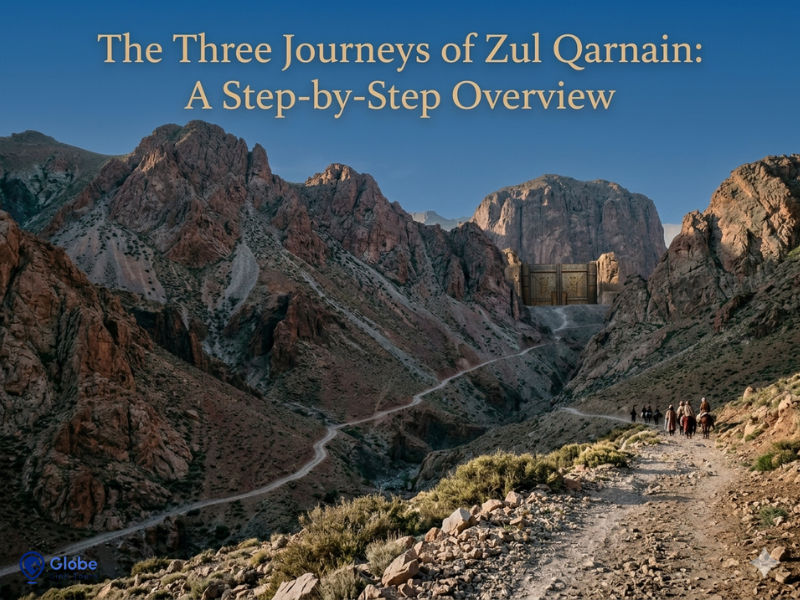
The Quran outlines three major expeditions that defined the reign of Zul Qarnain. Each journey highlights a different aspect of his wisdom and leadership.
1. The Journey to the West
Zul Qarnain traveled westward until he reached the furthest inhabited land, described as the place where the sun sets in a spring of murky water. There, he encountered a community of people. Allah gave him the choice to either punish them or treat them with kindness. He chose the path of justice. He declared that the wrongdoers would face punishment, while those who believed and did good deeds would receive kindness and ease.
2. The Journey to the East
Next, he traveled toward the rising of the sun. He found a people who had no shelter or protection from the heat of the sun. They lived a very primitive lifestyle. Zul Qarnain left them undisturbed, showing respect for their way of life while acknowledging that Allah encompasses all things in knowledge.
3. The Journey to the Mountain Barrier
His third journey brought him to a region between two large mountains. The people living there spoke a language that was almost impossible for outsiders to understand. They were under constant attack from two destructive tribes known as Yajuj and Majuj (Gog and Magog).
The locals recognized Zul Qarnain’s power and offered to pay him a tribute if he would build a barrier to protect them. His response reflected his deep faith. He refused their money, stating that the power given to him by Allah was far better than any financial reward. Instead, he asked for their physical labor to help construct a massive iron and copper wall, sealing Yajuj and Majuj behind it until the final days before the Day of Judgment. You can read more about the historical and geographical context of these regions on Wikipedia.
A Real-World Example of Material Wisdom
The construction of the iron wall is an incredible demonstration of engineering and community building. Zul Qarnain did not just rely on a miracle to solve the problem. He utilized advanced technology and local human resources.
He asked the people to bring blocks of iron until the space between the two mountains was completely filled. Then, he told them to fan the fire with bellows until the iron became red hot. Finally, he poured molten copper over the hot iron to seal the gaps, creating an impenetrable alloy structure.
This example teaches us that faith does not mean sitting back and doing nothing. True faith requires combining earnest prayer with hard work, utilizing available science, and cooperating with local communities to solve massive societal challenges.
Common Mistakes People Make When Studying Zul Qarnain
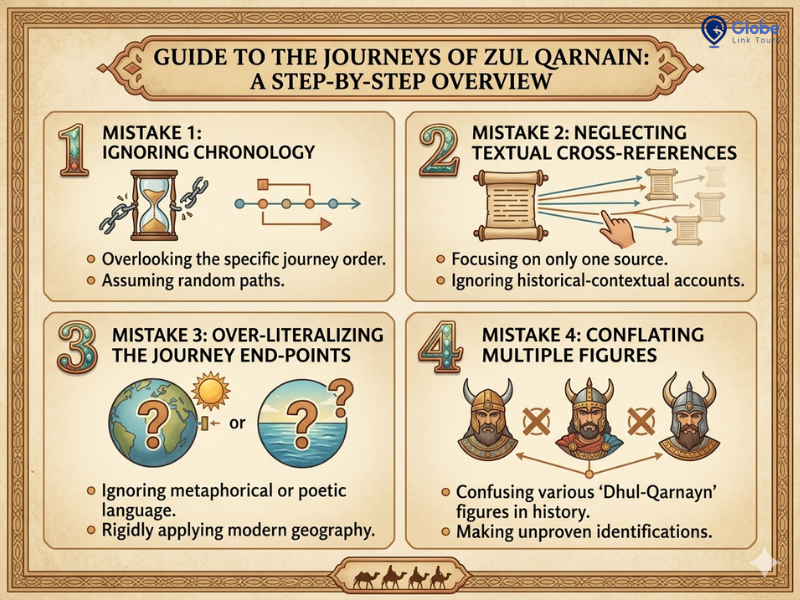
- Confusing him with Alexander the Great: Many early commentators and historians tried to link Zul Qarnain to Alexander III of Macedon. However, modern research shows major contradictions. Alexander was not a monotheist, whereas the Quran describes Zul Qarnain as a devout believer in 1 God.
- Focusing on locations instead of lessons: Spending hours trying to pinpoint the exact GPS coordinates of the iron wall or the muddy spring can distract you from the moral and spiritual lessons of surah kahf zul qarnain.
- Believing he was a Prophet: While he received inspiration from Allah regarding his decisions, the consensus among most Islamic scholars is that he was a righteous king and a powerful leader, not a prophet.
- Underestimating the threat of Yajuj and Majuj: Some view the tribes as metaphorical or mythical. The Quranic text and authentic traditions treat them as real entities whose release is a major sign of the end times.
Expert Tips for Deepening Your Quranic Studies
- Read Surah Al-Kahf with Translation Every Friday: Do not just recite the Arabic words quickly. Take 10 minutes to read the translation of the verses concerning islamic history to truly absorb the meaning.
- Look for Cross-References: Connect the story of Zul Qarnain with the other 3 stories in Surah Al-Kahf (The People of the Cave, The Man with Two Gardens, and Moses with Al-Khidr). Notice how all 4 stories deal with trials of faith, wealth, knowledge, and power.
- Apply the Lessons to Your Daily Life: Ask yourself how you can use your specific skills, money, or influence to build “walls” of safety and support for those who are struggling around you.
How This Connects to Your Spiritual Journey
Studying the great figures of Islamic history inspires a deep desire to visit the sacred lands where revelation came down. Reflecting on these profound Quranic narratives changes how you view the world, pushing you to seek out meaningful spiritual experiences.
When you feel ready to transition from reading history to experiencing it firsthand, a structured pilgrimage can ground these lessons in reality. Planning a trip to Mecca and Medina allows you to walk through the landscapes where the Quran was revealed, deepening your connection to the stories of the prophets and righteous leaders. For those traveling from the West, navigating the logistics of such a trip requires careful preparation, which is why reviewing a comprehensive Umrah travel agency guide for USA pilgrims can make the transition smooth and stress-free.
When to Consider Expert Help
Organizing a major international journey for spiritual purposes involves many moving parts. Managing visa documentation, finding close hotels, and arranging reliable transport can become overwhelming, taking your focus away from prayer and reflection.
Working with an experienced agency ensures everything runs smoothly behind the scenes. If you want a completely managed, highly comfortable itinerary that allows you to focus 100% on your worship, booking a specialized package like a luxury umrah package 10 nights is an excellent option to guarantee peace of mind.
Conclusion
The story of Zul Qarnain remains one of the most powerful narratives in the Quran. It reminds us that power and wealth are tests from Allah, meant to be used for the benefit of humanity. By studying his journeys, his just leadership, and his reliance on faith combined with hard work, we gain valuable insights into how to live a balanced, righteous life today. Take some time this week to open Surah Al-Kahf, read through these verses carefully, and think about how you can implement his legacy of justice and humility in your own daily interactions.
Frequently Asked Questions
Why is Zul Qarnain mentioned in Surah Al-Kahf?
He was mentioned because the Quraysh tribe in Mecca asked Prophet Muhammad (peace be upon him) 3 challenging questions to test his prophethood, one of which was about a great traveler who reached the East and the West.
Are Yajuj and Majuj still behind the wall?
Yes, according to Islamic tradition, they remain contained behind the barrier built by Zul Qarnain and will only break through when Allah decrees it as a major sign of the Day of Judgment.
What materials did Zul Qarnain use to build the barrier?
He used large blocks of iron to fill the gap between the mountains, heated them with fire, and then poured molten copper over the structure to make it smooth, strong, and impossible to climb or break.
Was Zul Qarnain a king of Persia?
Some modern scholars, including Cyrus the Great theorists, argue that historical records of the Persian king match the description of Zul Qarnain’s justice and conquests, but the Quran does not name him directly.
How does this story help first-time Umrah pilgrims?
It builds a strong foundation of faith, teaches humility in times of success, and highlights the importance of utilizing material means while keeping your ultimate trust placed firmly in Allah.