
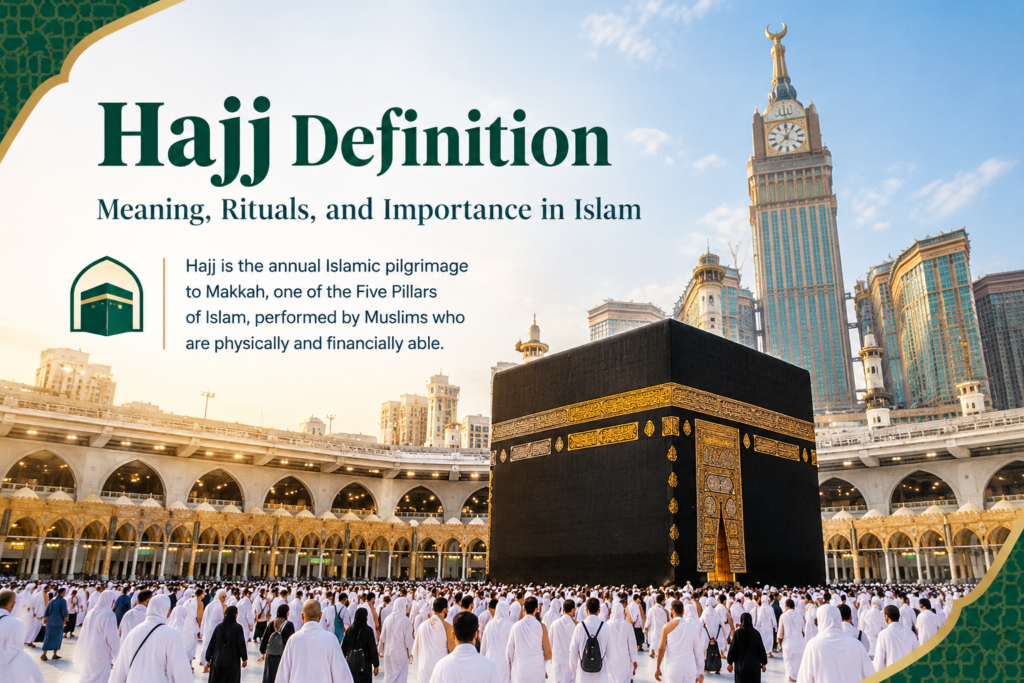
Hajj Definition is one of the most important acts of worship in Islam. Every year, Muslims from different countries travel to Makkah in Saudi Arabia to take part in a pilgrimage centered on faith, devotion, and obedience to Allah. For many believers, completing Hajj is a lifelong aspiration and a deeply meaningful spiritual experience.
The Hajj definition is the annual Islamic pilgrimage to Makkah that Muslims are required to perform once in their lifetime if they are physically and financially able to do so. It is one of the Five Pillars of Islam and takes place during specific days of the Islamic month of Dhul Hijjah.
Understanding Hajj involves more than knowing where pilgrims travel. Its rituals carry religious meaning, connect Muslims with the history of Prophet Ibrahim (Abraham) and his family, and bring together people from diverse cultures in a shared act of worship.
What Is Hajj in Islam?
Hajj is a prescribed pilgrimage to the holy city of Makkah. It includes a series of rituals performed at designated locations and times, following the teachings of Islam.
The Arabic word الحج refers to Hajj. The pilgrimage is a central expression of Muslim faith and reminds believers of their responsibility to worship Allah, seek forgiveness, and live with sincerity and humility.
Unlike a general visit to a religious site, Hajj has specific rituals, timing, and requirements. Pilgrims follow an established sequence of worship, including entering Ihram, performing Tawaf around the Kaaba, standing at Arafat, and carrying out other rites during the pilgrimage period.
Hajj is also a powerful example of unity. Pilgrims from different backgrounds gather wearing simple clothing and performing the same essential rituals. Differences in nationality, language, wealth, and social position become less important as worshippers focus on their relationship with Allah.
Why Is Hajj Important to Muslims?
Hajj is the fifth Pillar of Islam, alongside the declaration of faith, prayer, charity, and fasting during Ramadan. Its importance comes from its place in Islamic teachings and the spiritual lessons associated with its rituals.
A Duty for Those Who Are Able
The Quran establishes Hajj as an obligation for those who are able to make the journey. Ability can involve financial means, physical capacity, and practical circumstances. Islamic scholars explain the details of this obligation, including how it applies to people with particular health or family situations.
A Muslim who is considering Hajj should learn the relevant requirements and seek reliable religious guidance if their circumstances are complicated.
An Opportunity for Reflection and Repentance
The pilgrimage encourages Muslims to reflect on their actions, ask Allah for forgiveness, and renew their commitment to living according to Islamic values.
Hajj requires patience, self-control, and consideration for others. Large crowds, long walks, and a demanding schedule can test a pilgrim’s character. Responding with kindness and restraint is an important part of approaching the journey with the right attitude.
A Gathering of the Muslim Community
Hajj brings together Muslims from across the world. Pilgrims may speak different languages and follow different cultural traditions, but they share the same central purpose: worshipping Allah.
This gathering highlights equality, humility, and the wider connection among Muslims beyond national boundaries.
What Do Muslims Do During the Hajj Pilgrimage?
The rituals of Hajj take place over several days in and around Makkah. Each act has a specific place in the pilgrimage and is performed according to Islamic teachings.
1. Entering Ihram
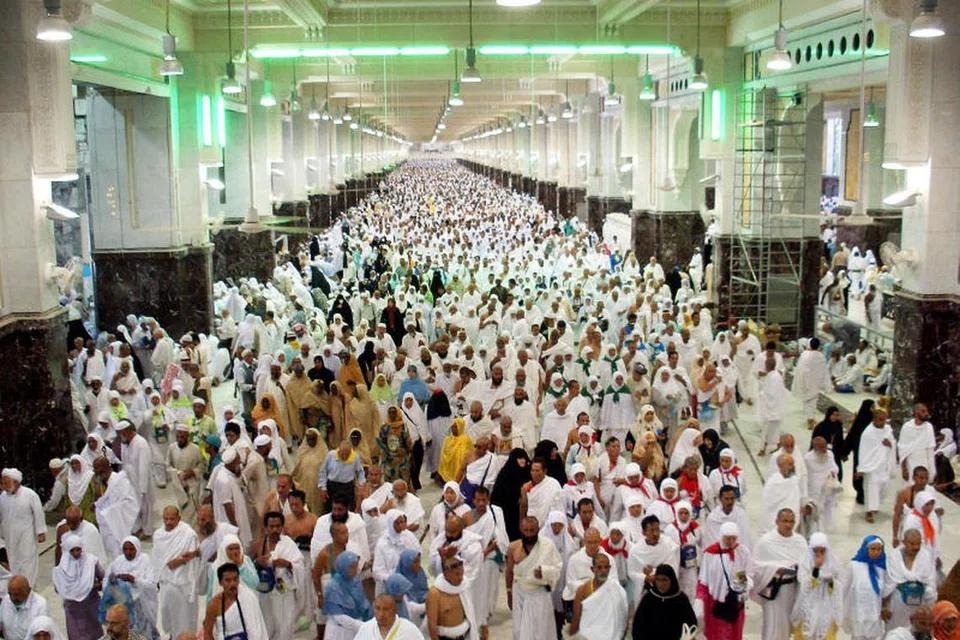
Pilgrims enter a sacred state called Ihram before beginning the required rites. They make their intention for Hajj and observe specific rules intended to encourage devotion and self-discipline.
Men generally wear two simple, unstitched pieces of white cloth, while women wear modest clothing that meets Islamic requirements. Ihram is not only about clothing; it also involves following particular restrictions and maintaining respectful conduct.
2. Performing Tawaf
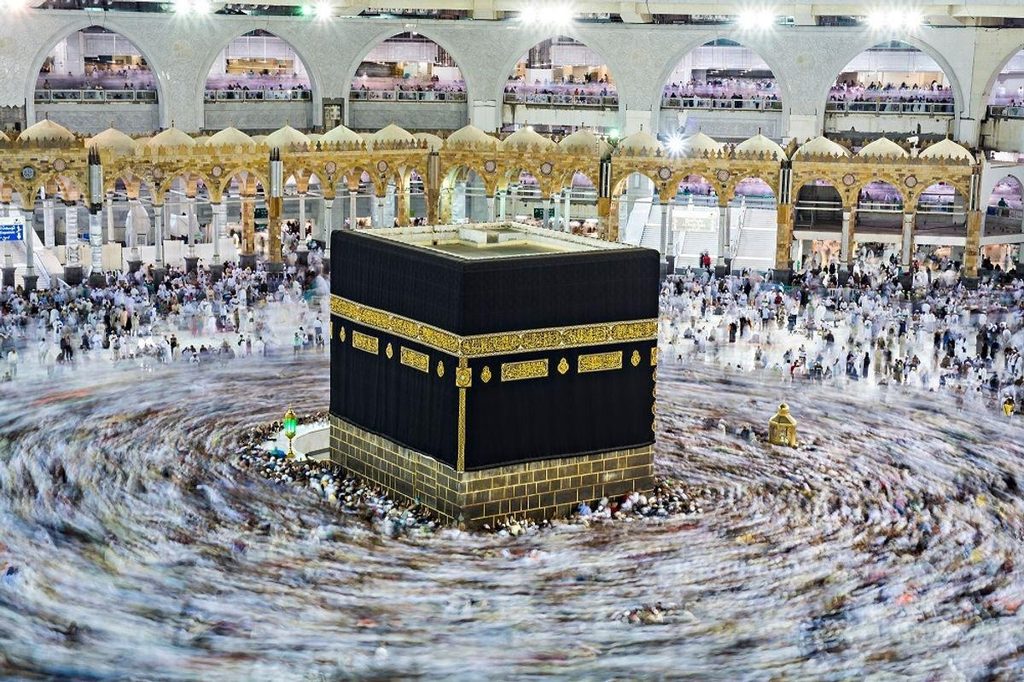
Tawaf involves walking around the Kaaba seven times in the Grand Mosque in Makkah. The Kaaba is the direction Muslims face during their daily prayers.
Tawaf is an act of worship, and pilgrims use this time for remembrance, supplication, and reflection. They should follow the prescribed route and avoid pushing or causing harm to others, especially in crowded areas.
3. Performing Sa’i
Sa’i involves walking seven lengths between the hills of Safa and Marwah, located within the Grand Mosque complex. This ritual recalls Hajar’s search for water for her son Ismail, as understood in Islamic tradition.
The story is a reminder of trust in Allah, perseverance, and hope during difficult circumstances.
4. Standing at Arafat
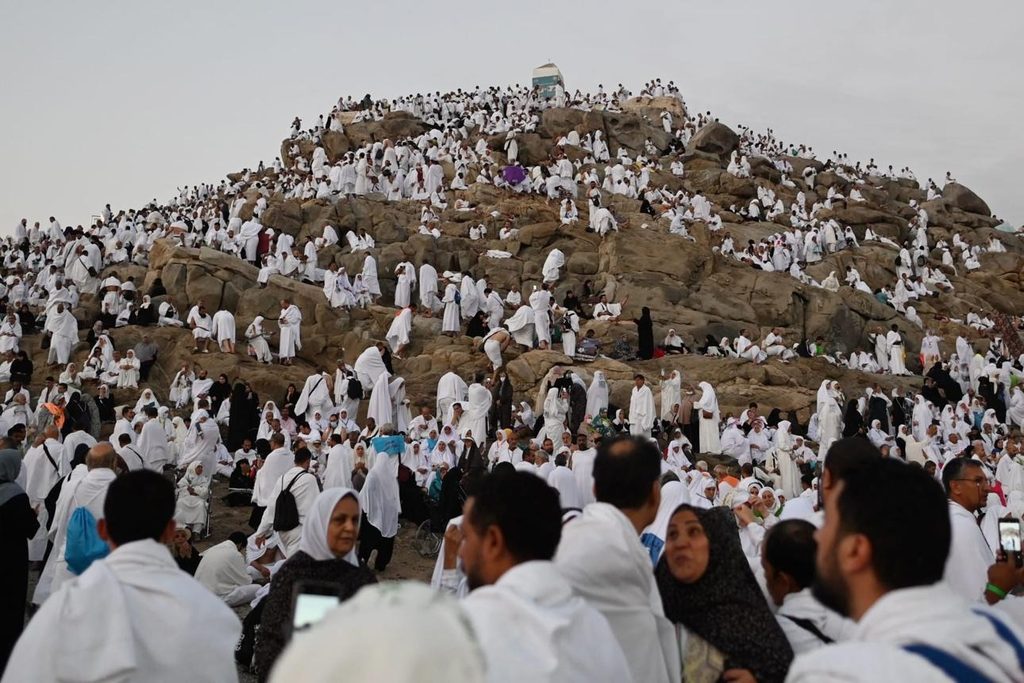
The standing at Arafat, known as Wuquf, is a central rite of Hajj. Pilgrims gather at the plain of Arafat on the ninth day of Dhul Hijjah to pray, remember Allah, and seek forgiveness.
This day holds immense spiritual importance. Pilgrims spend time in supplication and reflection, asking Allah for mercy and guidance.
5. Staying at Muzdalifah and Completing Further Rites
After leaving Arafat, pilgrims travel to Muzdalifah, where they spend part of the night according to the prescribed rites. They pray and prepare for the next stages of Hajj.
Pilgrims then take part in additional rituals, including the symbolic stoning of the Jamarat in Mina. The pilgrimage also includes the sacrifice rite for those required to perform it, followed by shaving or trimming the hair and completing the remaining prescribed rites.
The exact obligations and order of some actions depend on the type of Hajj being performed and a pilgrim’s circumstances. First-time pilgrims should study a reliable Hajj guide or seek guidance from a qualified scholar before traveling.
When Does Hajj Start, and When Is the Next Hajj?
Hajj takes place annually during specific dates in Dhul Hijjah, the final month of the Islamic lunar calendar. Its main rites occur from the eighth through the thirteenth days of the month, although the essential standing at Arafat occurs on the ninth day.
Because the Islamic calendar follows lunar months, Hajj moves through the seasons of the Gregorian calendar over time.
If you are asking, “When is the next Hajj?”, the next annual pilgrimage after Hajj 2026 is expected in 2027. Exact Gregorian dates depend on the Islamic calendar and the official announcement of the relevant authorities. Travelers should verify dates before arranging flights, accommodation, or time away from work.
For Muslims living in the United States, early preparation is especially useful because international flights, accommodation, and official registration arrangements need to be coordinated.
Who Is Required to Perform Hajj?
Hajj is obligatory once in a lifetime for a Muslim who meets the conditions of ability. These conditions are understood through Islamic teachings and scholarly interpretation.
Important considerations include:
- Faith: Hajj is an act of worship performed by Muslims.
- Physical ability: The pilgrimage involves walking, crowds, and demanding conditions. Specific guidance may be needed for people with health limitations.
- Financial ability: A person should be able to meet the costs of the journey without neglecting essential financial responsibilities.
- Practical circumstances: Travel eligibility, family responsibilities, and other relevant conditions may affect a person’s ability to undertake the pilgrimage.
People who are unsure whether Hajj is obligatory in their situation should consult a trusted Islamic scholar. Individual circumstances can make a difference, so general online explanations cannot replace personal religious guidance.
What Is the Difference Between Hajj and Umrah?
Hajj and Umrah are both pilgrimages to Makkah, but they differ in timing, requirements, and rituals.
| Hajj | Umrah |
| Performed during specific days of Dhul Hijjah | Can generally be performed at different times of the year, subject to current regulations |
| Obligatory once in a lifetime for Muslims who are able | A distinct pilgrimage with its own religious rulings |
| Includes standing at Arafat and other Hajj-specific rites | Does not include the standing at Arafat |
| Requires the applicable Hajj authorization | Requires appropriate entry permission and compliance with current rules |
Umrah is sometimes called the lesser pilgrimage, but it remains a meaningful act of worship. If you are planning Umrah from the United States, check current Saudi visa and entry requirements before booking travel.
How Can First-Time Pilgrims Prepare for Hajj?
Preparation should cover both religious learning and practical arrangements. A well-organized plan helps pilgrims focus on worship instead of trying to solve every detail at the last minute.
Consider these steps:
- Learn the rituals: Understand the sequence of Hajj and the requirements of the type you intend to perform.
- Follow official registration instructions: Use the authorized channels for your country of residence and the relevant Hajj season.
- Prepare physically: Build up your walking stamina gradually, if appropriate for your health.
- Review health guidance: Check current vaccination and health requirements and speak with a healthcare professional if needed.
- Organize travel documents: Check passport validity, visa requirements, confirmations, and emergency contact information.
- Prepare spiritually: Learn relevant supplications, reflect on your intentions, and practice patience and consideration for other pilgrims.
Pilgrims traveling from the United States should also compare official package details, transportation arrangements, hotel locations, and cancellation conditions. Do not assume that registering interest automatically guarantees a confirmed place.
Frequently Asked Questions About Hajj
What is the simple definition of Hajj?
Hajj is the annual Islamic pilgrimage to Makkah that Muslims are required to perform once in their lifetime if they are able to do so. It is one of the Five Pillars of Islam.
Why do Muslims perform Hajj?
Muslims perform Hajj in obedience to Allah and as an act of worship. It encourages repentance, humility, patience, and unity among believers.
How many days does Hajj take?
The main Hajj rituals take place over several days, principally from the eighth to the thirteenth of Dhul Hijjah. The total travel period depends on the pilgrim’s itinerary and arrangements.
Is Hajj the same as visiting the Kaaba?
No. Visiting the Kaaba or performing Tawaf alone does not constitute the complete Hajj pilgrimage. Hajj includes specific rites performed at designated times and locations.
Can Muslims perform Hajj every year?
Muslims who are able may perform Hajj more than once, but the religious obligation is generally once in a lifetime. Eligibility, official authorization, and travel rules must still be followed for each pilgrimage.
A Journey of Faith, Humility, and Renewal
Hajj is more than a journey to a sacred place. It is an act of devotion that brings together worship, remembrance, patience, and a renewed commitment to Islamic values. Its rituals connect pilgrims with important stories from Islamic tradition while reminding them of their shared faith.
Understanding the meaning of Hajj is a valuable first step for anyone preparing for this pilgrimage. By learning its rituals, following reliable religious guidance, and making practical arrangements early, future pilgrims can approach the journey with greater understanding and purpose.