

The Purpose, Rituals, and Journey of a Lifetime
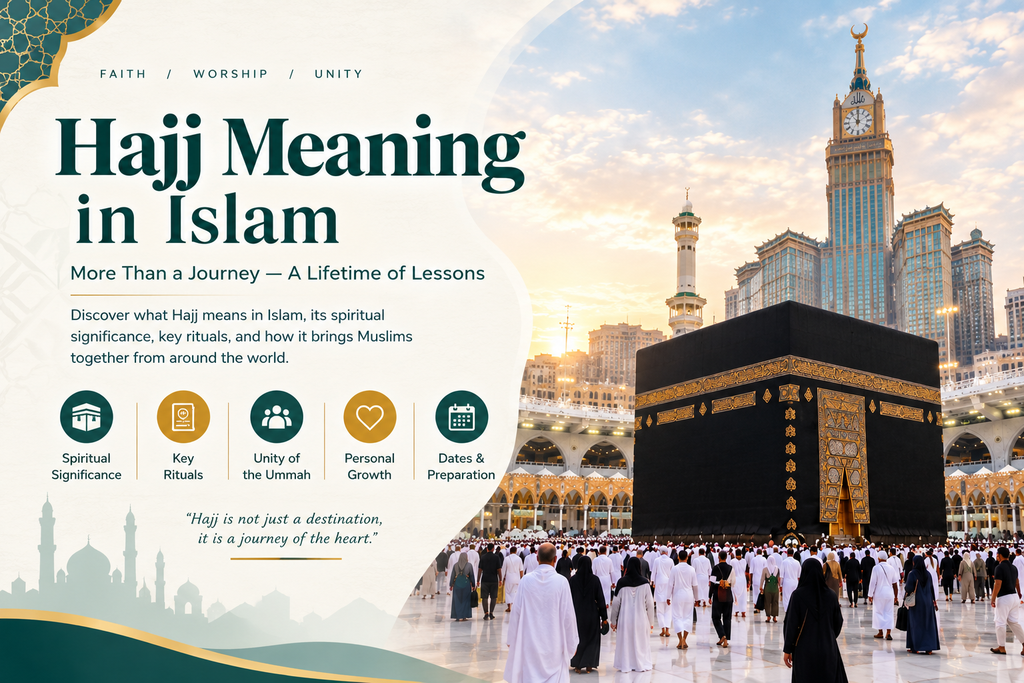
Hajj Meaning in Islam is one of the most important acts of worship in Islam. Every year, Muslims from different countries, cultures, and backgrounds travel to Makkah to perform this sacred pilgrimage. For many, it represents a lifelong dream, an opportunity to strengthen their relationship with Allah, seek forgiveness, and reflect on the purpose of their lives.
Understanding the Hajj meaning in Islam helps pilgrims appreciate more than the physical journey. Hajj Meaning in Islam is also about patience, humility, unity, and devotion. For Muslims living in the United States, learning about its spiritual significance and practical requirements can be a valuable first step toward preparing for this important responsibility.
What Does Hajj Mean in Islam?
The word Hajj refers to the pilgrimage to Makkah that Muslims are required to perform once in their lifetime if they are physically and financially able to do so.
Hajj Meaning in Islam is one of the Five Pillars of Islam, alongside the declaration of faith, prayer, Zakat, and fasting during Ramadan. Its importance is established in the Quran, which calls upon those who are able to make the journey to perform the pilgrimage.
The purpose of Hajj Meaning in Islam is not simply to visit a holy place. Pilgrims participate in prescribed acts of worship, remember Allah, and reflect on their responsibilities as Muslims.
Hajj also brings people together regardless of their nationality, language, occupation, or financial background. During the pilgrimage, everyone follows the same essential rites, emphasizing equality and shared faith.
Why Is Hajj So Important for Muslims?
Hajj has deep spiritual and personal significance. It encourages believers to step away from everyday distractions and concentrate on worship.
Several important lessons are associated with the pilgrimage:
- Faith and devotion: Pilgrims dedicate their time and effort to fulfilling an important religious obligation.
- Humility: The simple clothing worn during Ihram reminds pilgrims that worldly status and possessions do not define a person’s worth before Allah.
- Patience: Crowds, walking, waiting, and changing conditions require calmness and consideration for others.
- Unity: Muslims from around the world gather to worship together.
- Reflection and repentance: Hajj offers an opportunity to seek forgiveness and renew one’s commitment to living according to Islamic teachings.
The experience can also encourage lasting changes after returning home, including greater gratitude, stronger family relationships, and more thoughtful treatment of others.
The Main Rituals of Hajj Meaning in Islam Explained
Hajj takes place during specific days of Dhul-Hijjah, the final month of the Islamic lunar calendar. Pilgrims follow a prescribed sequence of rites, although some details differ according to the type of Hajj being performed and relevant religious guidance.
1. Entering Ihram
Ihram is the sacred state a pilgrim enters before beginning the relevant rites. It involves making the intention for Hajj and observing particular restrictions.
Men generally wear two simple, unstitched pieces of cloth, while women wear modest clothing that meets Islamic requirements. The spiritual meaning of Ihram goes beyond clothing: it reminds pilgrims to approach the pilgrimage with sincerity, discipline, and humility.
2. Traveling to Mina
On the eighth day of Dhul-Hijjah, many pilgrims travel to Mina and spend time in prayer and remembrance of Allah. The exact arrangements depend on the pilgrimage schedule and the authorized services provided.
3. Standing at Arafat
The Day of Arafah, the ninth of Dhul-Hijjah, is a central part of Hajj. Pilgrims gather at Arafat to pray, remember Allah, and seek forgiveness.
Standing at Arafat is a defining rite of Hajj. It is a time for sincere supplication, personal reflection, and hope in Allah’s mercy.
4. Muzdalifah and the Rites of Eid
After Arafat, pilgrims proceed to Muzdalifah according to the prescribed schedule. They pray and spend time in remembrance of Allah before continuing with the next rites.
During the following days, pilgrims perform the required rites associated with Mina, including the symbolic stoning of the Jamarat. Other rites include the appropriate sacrifice where required, shaving or shortening the hair, and Tawaf of the Kaaba. The precise order and applicable requirements can vary, so pilgrims should follow qualified religious guidance and their authorized group’s instructions.
How Long Is Hajj?
People often ask, how long is Hajj? The main pilgrimage rites take place over several days, commonly from the eighth through the thirteenth of Dhul-Hijjah, depending on the pilgrim’s schedule and the rites performed.
However, the complete trip from the United States usually requires additional time for international flights, accommodation, arrival procedures, and any planned visits to Makkah or Madinah.
When arranging time away from work, allow for possible flight changes and recovery after a demanding journey. The package itinerary should clearly state the travel dates, accommodation nights, and arrangements for each stage of the pilgrimage.
Hajj Planning for Muslims in the United States
For American Muslims, preparation includes religious learning as well as travel arrangements. Hajj services and booking procedures may change between seasons, so it is important to consult official sources.
What about Hajj 2026 registration?
Hajj 2026 has already taken place as of October 2026. Anyone who missed that season should focus on checking the official arrangements and announcements for a future pilgrimage.
For U.S. residents, the authorized Hajj booking process, eligibility requirements, available packages, and deadlines should be confirmed through the official Nusuk Hajj platform Do not rely on an old registration date or assume that previous-season procedures will remain unchanged.
Comparing Hajj packages
A Hajj package may include accommodation, transportation, meals, and other services, depending on the option selected. Before making a commitment, review:
- The complete itinerary and accommodation arrangements.
- Transportation between the pilgrimage sites.
- Meal provisions and service inclusions.
- Payment terms, cancellation policies, and refund conditions.
- Required documentation and applicable deadlines.
If you are exploring Hajj 2027 packages from USA, confirm that the package and provider are part of the authorized arrangements for the relevant season. Availability, prices, and booking conditions should be verified directly rather than assumed.
Globe Link Tours can also be a starting point for reviewing travel-planning information and understanding the services you may need to compare.
What Is a Haji?
A Haji is a person who has completed the Hajj pilgrimage. The term is commonly used as a respectful title in some Muslim communities.
Completing Hajj is an important religious milestone, but the title itself is not a measure of a person’s character or level of faith. The values learned during the pilgrimage—humility, kindness, patience, and devotion—remain important long after the journey ends.
Frequently Asked Questions
Is Hajj compulsory for every Muslim?
Hajj Meaning in Islam is obligatory once in a lifetime for Muslims who meet the religious conditions, including having the physical ability and financial means to undertake it.
When is Hajj performed?
Hajj Meaning in Islam takes place during specific days of Dhul-Hijjah. The corresponding dates on the Gregorian calendar change each year because the Islamic calendar follows lunar months.
Is Hajj the same as Umrah?
No. Hajj is an obligatory pilgrimage for eligible Muslims and takes place during a specific period. Umrah pakages can generally be performed at other times of the year, subject to applicable regulations, and has a different set of rites.
Can I plan Hajj without checking official updates?
It is better to check official announcements regularly. Registration procedures, eligibility, package availability, and travel rules can change between pilgrimage seasons.
Preparing for a Meaningful Pilgrimage
Hajj Meaning in Islam combines worship, physical effort, patience, and spiritual reflection. Understanding its meaning allows future pilgrims to prepare with a clearer sense of purpose rather than focusing only on flights and accommodation.
For Muslims in the United States who hope to perform Hajj in a future season, begin by learning the rituals, checking official booking requirements, organizing finances, and allowing sufficient time for preparation. With reliable information and thoughtful planning, you can approach this sacred journey with greater confidence and a sincere focus on worship.