
Visiting Makkah is a deeply meaningful part of an Umrah journey. Many pilgrims also want time for ziyarat after completing their main acts of worship. A planned Makkah Ziyarat tour can make the day more comfortable, especially when travel, family needs, and rest time all have to fit together. Globe Link Tours also offers organized options such as a premium Umrah package for 10 nights for pilgrims planning a longer stay.
The main purpose of ziyarat is to visit important Islamic historical sites Makkah and reflect on their connection with Islamic history. Some places are close to the city, while others require transportation. Knowing the route before leaving your hotel can save time and reduce unnecessary travel.
For many visitors, the hardest part is not knowing which locations to include. They may also worry about transport, walking, family members, or spending too much time on the road. A calm plan can make the experience much more comfortable.
A Clear Starting Point for Makkah Ziyarat
Ziyarat in Makkah can include several locations connected with important events and people from Islamic history. The most discussed sites include Jabal al Nour, Cave of Hira, Mount Thawr, Jabal al Rahmah, Masjid al Jinn, Mina, and Muzdalifah.
These locations are not all in the same area. That is why a Makkah Ziyarat tour usually works better when the route is arranged before the day begins. A planned route also gives you a better idea of how much time you may spend traveling.
The value of Islamic historical sites Makkah is mainly connected with their historical and religious background. Visitors should approach each location with respect and avoid treating the visit like an ordinary sightseeing trip.
If you are comparing different Umrah arrangements, you can also review an affordable Umrah package for 10 nights as part of your wider travel planning.
Which Makkah Sites Usually Fit Into a Ziyarat Route?
A useful Makkah Ziyarat route normally groups locations according to their area. This reduces backtracking and keeps the day more manageable.
Jabal al Nour and Cave of Hira
Jabal al Nour is one of the most recognized locations around Makkah. The mountain is known for the Cave of Hira, a place strongly connected with the early history of Islam.
A Cave of Hira visit is different from a regular sightseeing stop because reaching the cave involves climbing the mountain. Visitors should think about their physical ability before planning the climb.
The Cave of Hira visit can be especially demanding for elderly pilgrims and people who are not comfortable with steep walking. A visitor may decide to view the mountain area without making the climb itself.
The Cave of Hira visit should therefore be treated as an individual decision rather than something every pilgrim must complete.
Mount Thawr
Mount Thawr is another well known location included in discussions about Islamic historical sites Makkah. It has an important connection with the early history of Islam.
A visit to the area can be included in a Makkah Ziyarat tour when the schedule allows enough travel time. Like Jabal al Nour, the mountain itself involves difficult climbing, so the physical needs of your group matter.
For families, it can be better to plan the mountain locations with enough rest between stops. Rushing from Mount Thawr to another site may make the day tiring.
Jabal al Rahmah
Jabal al Rahmah is located in the Arafat area and is often included in wider Makkah Ziyarat plans. It is associated with the plain of Arafat and carries strong importance in the story of Hajj.
A Jabal al Rahmah visit can be included as part of a wider route covering locations outside central Makkah. The distance between sites means transportation planning is important.
Visitors should allow enough time for travel rather than filling the schedule with too many stops.
Masjid al Jinn
Masjid al Jinn is another location often mentioned in lists of Islamic historical sites Makkah. It is located in Makkah and can fit more easily into a city based route than mountain locations.
A visit to Masjid al Jinn may be combined with nearby stops when transportation is already arranged. The location should still be approached with proper manners and respect.
It is worth remembering that a Makkah Ziyarat tour does not need to feel rushed. The purpose is to visit meaningful locations with a calm mindset.
Can Mina and Muzdalifah Be Included?
Mina and Muzdalifah are important locations connected with the Hajj journey. Pilgrims may include these areas in a wider historical visit when their travel plan allows it.
A Mina and Muzdalifah visit is different from visiting a mosque or mountain because these locations have a special connection with the rites of Hajj. Visitors should understand the purpose of the place before adding it to a sightseeing style schedule.
A Mina and Muzdalifah visit may also require careful timing because the areas can be farther from central Makkah. Transportation should be arranged with the full route in mind.
For travelers interested in a broader background, the Makkah Ziyarat places guide can be used as a related resource when planning the wider visit.
A Practical Route for a Makkah Ziyarat Tour
A route should match your available time and the needs of everyone traveling with you. There is no need to put every location into a single day.
A practical plan can start with locations that are easier to reach from your hotel. Masjid al Jinn can fit into a city based route, followed by other locations depending on distance and road conditions.
Mountain locations such as Jabal al Nour and Mount Thawr need more thought because the climb can take physical effort. A Cave of Hira visit should not be added simply because it appears on a list. Your group should be comfortable with the physical side of the visit.
A later part of the route can include Jabal al Rahmah, Mina, and Muzdalifah when these locations fit your schedule. A Mina and Muzdalifah visit can take additional travel time, so it is better to leave enough space rather than rushing back to the hotel.
This approach also makes a Makkah Ziyarat tour easier for families. Parents can rest while children stay comfortable, and elderly visitors are less likely to feel pressured by a packed schedule.
Transport Options for Makkah Ziyarat
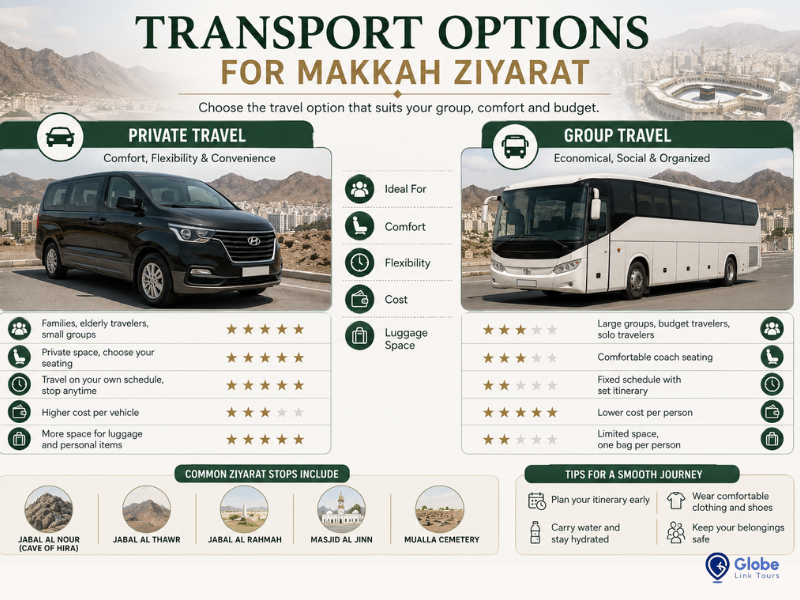
Transportation is one of the most important parts of planning ziyarat in Makkah. Several locations are spread across different areas, so walking is not practical for every stop.
Private transportation can be useful for families or groups that want greater control over the route. It also gives you the ability to take breaks between locations instead of staying on a fixed schedule.
Group transportation may work well for travelers who are comfortable following a shared route. The main point is to know the planned stops before starting the day.
When transport is arranged properly, your attention can stay on the purpose of the visit instead of worrying about the next road or location.
Real World Example for a Family Visit
Imagine a family traveling with 2 parents, 2 children, and an older family member. They want to visit several Islamic historical sites Makkah but do not want an exhausting day.
They can start with an easier city location and then continue toward the planned route. Instead of making the older family member climb Jabal al Nour, the family can decide that the Cave of Hira visit is not suitable for that person.
The family can then continue toward another location and include Jabal al Rahmah if the timing remains comfortable. A Mina and Muzdalifah visit can be added only if there is enough time and everyone remains comfortable.
This kind of plan is often better than trying to complete every location. The goal is a peaceful visit, not a race against the clock.
Issues That Can Make the Visit Difficult
Many problems come from poor timing rather than the locations themselves. A group may start late, add too many stops, or underestimate travel time between different areas.
Another issue is physical effort. Jabal al Nour and Mount Thawr involve mountain terrain, while other locations may require standing or walking for some time. This matters even more when children or older family members are traveling.
Some visitors also expect every stop to have the same type of experience. They are not all alike. A Cave of Hira visit, a visit to Masjid al Jinn, and a Mina and Muzdalifah visit each have different historical contexts.
Keeping expectations realistic can make the day much calmer.
Practical Tips for a Better Visit
Start with a written route. Keep the number of stops realistic and leave space between them. This gives your group time to rest if the day becomes tiring.
Think about the physical needs of every traveler before adding mountain locations. A Cave of Hira visit requires more physical effort than many city based stops, so it should be treated differently.
Keep the route flexible when possible. If your group becomes tired, there is no need to force every planned stop. A shorter Makkah Ziyarat tour can still be meaningful.
Respect local instructions at every location. Keep your voice low, maintain cleanliness, and avoid creating disturbance for other visitors.
For travelers who want a more comfortable stay while planning their wider journey, a Kaaba View Umrah package for 7 nights is another available option.
Planning Around Your Main Umrah Schedule
Ziyarat should fit around your main Umrah plans rather than making the whole journey feel rushed. Worship, rest, meals, hotel time, and travel all need space in the schedule.
This is especially important for families. A packed itinerary may look good on paper but can become tiring once children or older relatives are included.
Your Makkah Ziyarat tour should therefore be treated as part of the wider journey. The same planning approach applies to transportation, hotel location, and the number of daily activities.
Travelers who want more information about current Umrah arrangements can also review the latest Umrah visa and travel guidance before finalizing their plans.
When Professional Travel Assistance Makes Sense
Some pilgrims prefer to manage their own ziyarat route. Others feel more comfortable when transportation and package arrangements are handled together.
Professional travel assistance can be useful when you are traveling with a large family, older relatives, or a group with different needs. It can also reduce the stress of coordinating hotels, transport, and the wider Umrah schedule.
Globe Link Tours provides different package options, including luxury Umrah arrangements for 10 nights for travelers planning a longer and more structured stay.
The right arrangement depends on your travel needs, available time, and the type of experience you want from your Makkah visit.
A Few Final Planning Points
Before starting your route, check the locations you plan to visit and keep the day realistic. Give extra attention to mountain sites because the physical effort can be much greater than expected.
A Makkah Ziyarat tour should leave room for rest and prayer. It should not turn your Umrah journey into a tiring sightseeing schedule.
If your plan includes a Mina and Muzdalifah visit, allow enough travel time and keep the purpose of these locations in mind. The same care applies to Jabal al Rahmah and Masjid al Jinn.
For current official guidance related to Umrah and visits, you can refer to the Saudi Ministry of Hajj and Umrah’s official awareness guides.
Conclusion
Ziyarat in Makkah gives pilgrims an opportunity to visit locations connected with important parts of Islamic history. Jabal al Nour, Cave of Hira, Mount Thawr, Jabal al Rahmah, Masjid al Jinn, Mina, and Muzdalifah each have their own place in the wider story.
The best route is not always the one with the highest number of stops. A well planned day gives enough time for travel, rest, family needs, and respectful visits.
Whether you arrange a private route or travel through an organized package, keep your schedule realistic. A calm visit can make your time in Makkah much more comfortable and meaningful.
Frequently Asked Questions
1. What are the main ziyarat places in Makkah?
Major locations often included in ziyarat plans include Jabal al Nour, Cave of Hira, Mount Thawr, Jabal al Rahmah, and Masjid al Jinn.
2. Is Cave of Hira suitable for every pilgrim?
The climb can be physically demanding, so each visitor should consider their own ability before planning a Cave of Hira visit.
3. Can families take children on a Makkah Ziyarat tour?
Yes. Families can plan fewer stops, allow rest periods, and use transportation that keeps the route comfortable for children.
4. Is Mount Thawr included in Makkah Ziyarat routes?
Mount Thawr is often included in wider ziyarat plans, but the route should account for travel time and the physical effort involved.
5. Can Jabal al Rahmah be included in the route?
Yes. Jabal al Rahmah can be added when the route and available travel time allow a visit to the Arafat area.
6. Is Masjid al Jinn part of Islamic historical sites Makkah?
Yes. Masjid al Jinn is commonly mentioned among important locations connected with Islamic history in Makkah.
7. Can Mina and Muzdalifah be visited during Umrah?
They may be included in a wider historical visit, but visitors should understand their special connection with the Hajj journey.
8. Is private transport useful for Makkah Ziyarat?
Private transport can make the route easier for families and groups because several locations are spread across different areas.
9. Can elderly pilgrims visit Makkah historical sites?
Yes. A relaxed route with suitable transport and fewer physically demanding stops can make the experience more comfortable.
10. How long can a Makkah Ziyarat tour take?
The time depends on the number of locations, route, transport, and rest periods. A smaller route takes less time than a full day plan.
11. Should Cave of Hira be included in every ziyarat plan?
No. The climb requires physical effort, so it should be included only when it suits the visitor’s ability and comfort.